How to Stay Ahead of Nutrient Deficiencies
Before They Impact Your Health
When it comes to your long‑term health, prevention is almost always easier
and far more effective
than trying to fix a problem after it shows up.
Nutrient deficiencies are a perfect example.
Many people don’t realise their levels are dropping
until symptoms begin affecting their energy,
mood, immunity, or overall well‑being.
The good news is that you can take simple,
proactive steps to stay ahead of deficiency‑related issues
before they ever have a chance to develop.
Start With a Clear Picture of Your Current Health
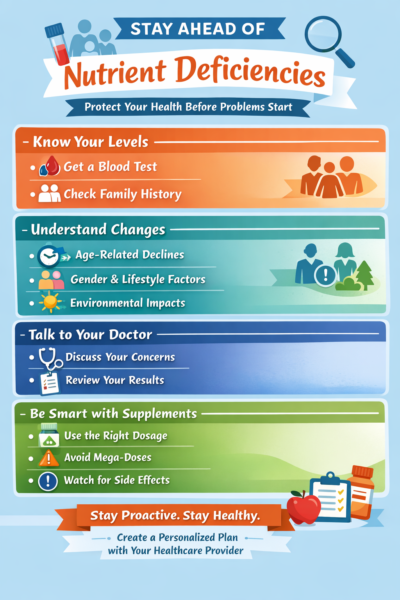
One of the smartest ways to protect your health is to understand what your body actually needs.
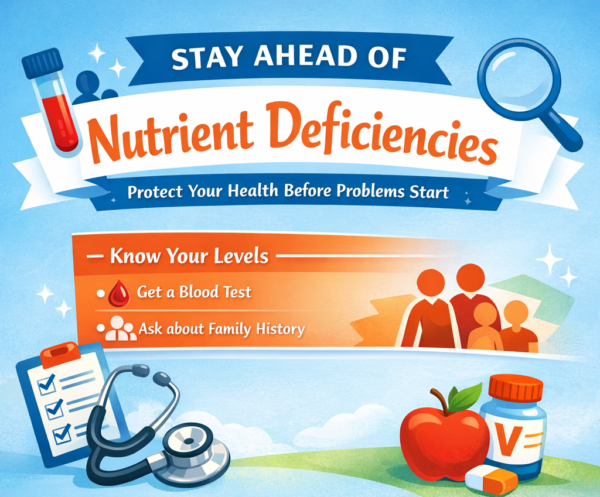
That starts with getting a blood test.
A basic panel can reveal whether you’re low in essential nutrients like iron, vitamin D, B vitamins, or other markers that influence energy, metabolism, and immune function.
It’s also worth having a conversation with your family.
Many nutrient deficiencies have a genetic component, and knowing your family history can help you identify what to monitor more closely.
Know Which Nutrient Levels Naturally Decline Over Time
Your body changes with age—and so do your nutrient needs.
Some vitamins and minerals naturally decline as we get older,
While others become harder to absorb.
There are also deficiencies that tend to be more common based on gender, lifestyle, or environmental factors.
Doing a bit of personalised research can help you understand:
- Which nutrients commonly decline at certain ages
- Which deficiencies are more likely based on your biological sex
- How your environment (sun exposure, diet, stress, activity level) may influence your nutrient needs
When you know what to look for, you can take steps to support your body before symptoms appear.
Supplements Can Help—But They’re Not a Cure‑All
While nutritional supplements can play a valuable role in supporting your health,
They’re not magic, and they’re not the right solution for everyone.
It’s important to remember:
- Supplements should never replace a balanced diet
- They can be incredibly helpful when used correctly
- Taking too much of certain nutrients can actually be harmful
This is why we always recommend talking to your doctor or healthcare provider before starting any new supplement. They can help you understand what your body truly needs and what dosage is appropriate for your situation.
Work With Your Healthcare Professional to Build a Personalised Plan
Your health is unique—and your supplementation plan should be too.
Before trying a new product, have a conversation with your doctor about:
- Your current symptoms or concerns
- Your blood test results
- Your family history
- Any medications you’re taking
- Your lifestyle and dietary habits
Together, you can create a plan that supports your body safely and effectively.
And if you ever experience side effects,
Discontinue use and check in with your healthcare provider right away.
The Bottom Line
Staying ahead of nutrient deficiencies isn’t complicated
It just requires awareness, a little research, and a proactive mindset.
By understanding your body’s needs, monitoring your levels, and working with a trusted healthcare professional,
You can protect your health long before problems arise.
Your body does incredible things for you every day.
Giving it the nutrients it needs is one of the simplest ways to return the favour.